Thursday, August 4, 2016

The music that kept Harry going


Harry wrote the two articles on this page for his community newsletter in February and April 2012. Now that I’ve posted a wide variety of his writings on this blog, I’m starting to believe that the greatest tribute we can give him is to listen to the songs that made him happy. When you see the song titles with hyperlinks (in blue) on this page, and in all the other music-themed articles on this blog, just click and listen. Enjoy!

Photos of Harry in June 2012. He encouraged others to appreciate the music from his youth through articles like these.


Unknown songwriters

It has always been a puzzlement to me why some songwriters remain relatively unknown. Take, for example, Harry Warren. Starting around 1918 until he died in 1981, he wrote more than 800 songs and actually published more than 500, more than most of the popular music composers of the 20th century. Certainly more than George Gershwin, more than Hoagy Carmichael, more than Jerome Kern, all of whom are considered giants in the field. He had more hits on the Hit Parade than any of them, including even Irving Berlin, the king of them all, and many of his songs became standards in the popular music business. How could he not be widely recognized as the musical genius he was? (And besides, anyone named Harry has got to be good.)

Harry Warren’s problem was that he worked on the West Coast, not the East Coast, in Hollywood, not New York, writing songs for movies, not for live theater. As a commentator of his era wrote, he was one of an army of invisible writers who cranked out good songs for bad movies. His real name was Salvatore Guaragna, one of eleven children of Antonio and Rachel Guaragna, immigrants from Italy. His father changed the family name to Warren while Harry was still a child growing up in Brooklyn. In Hollywood he worked with many of the great lyricists, some unknown, some famous, including Al Dubin, Mack Gordon, Johnny Mercer, Ira Gershwin, Leo Robin, Harold Adamson, and others. Just to give you an idea of the enormous range of songs he wrote, I’ll list a few of my favorites – not all of them, by any means, just a few.

Lullaby of Broadway, Jeepers Creepers, On the Atcheson, Topeka and the Santa Fe, Chattanooga Choo-Choo, I’ve Got a Gal in Kalamazoo, That’s Amore, You’re my Everything, I Found a Million Dollar Baby, You’re getting to Be a Habit With Me, 42nd Street, Shuffle Off to Buffalo, I’ll String Along With You, September in the Rain, You Must Have Been a Beautiful Baby, My Heart Tells me, I Had the Craziest Dream, The More I See You, I Only Have Eyes For You, and dozens more. And the two I like best because the poetry and the music are perfect blends – You’ll Never Know and There’ll Never Be Another You. The lyrics for both were written by Mack Gordon.

You’ll Never Know (Lyric)

You’ll never know just how much I miss you. You’ll never know just how much I care. And if I tried, I just couldn’t hide my love for you. You ought to know, for haven’t I told you so a million or more times. You went away and my heart went with you, I speak your name in my every prayer. If there is some other way to prove that I love you, I swear I don’t know how. You’ll never know if you don’t know now.

There’ll Never Be Another You (Lyric)

There will be many other nights like this. And I’ll be standing here with someone new. There will be other songs to sing, another fall, another spring, But there will never be another you. There will be other lips that I may kiss, But they won’t thrill me like yours used to do. Yes, I may dream a million dreams, But how can they come true? If there will never ever be another you.


A song remembered

I had just heard a news report on the radio and the announcer said, “We will bring you updates as time goes by”, and the memories came flooding in. “As Time Goes By”, one of the greatest songs of our times, and “Casablanca”, one of the greatest movies of the 20th Century. The song was written by Herman Hupfeld, a moderately successful songwriter who often wrote songs tailored to specific musical shows or films. In 1931 he wrote “As Time Goes By” for a Broadway show called “Everbody’s Welcome”. It worked in the show but it was not a big seller. Rudy Vallee, singing star of the 1930s, featured his own recording on his radio show, but it was soon forgotten. Hupfeld had a more successful song with “Let’s Put Out the Lights and Go To Sleep”, which Rudy Vallee used as his theme song on his radio show. In the mid-1930s, Hupfeld retired to a quiet life in his hometown of Montclair, New Jersey.

Then, in 1942, Warner Brothers Studios made a movie called “Casablanca” starring Humphrey Bogart and Ingrid Bergman. This long-forgotten love song was revived for the film. A relatively unknown singer named Dooley Wilson was picked to sing it in the movie and his vocal rendition, accompanying himself on the piano, became an immediate worldwide sensation. 

Suddenly, Herman Hupfeld was plucked out of retirement and through the WWII period made countless appearances on radio and television shows to play the piano and sing his song. After the war, he retired again. He was only 55 years old when he died in 1951. In an ironic footnote, Dooley Wilson, whose performance made the song an international best seller, could not play the piano. He fingered the keys in the movie while the music was dubbed in.

As Time Goes By (Lyric)

You must remember this, A kiss is just a kiss, A sigh is just a sigh. The fundamental things apply, As time goes by. And when two lovers woo, They still say I love you, On that you can rely. No matter what the future brings, As time goes by. Moonlight and love songs, Never out of date, Hearts full of passion, Jealousy and hate. Woman needs man, And man must have his mate, That, no one can deny. It’s still the same old story, A fight for love and glory, A case of do or die. The world will always welcome lovers, As time goes by.

Let’s Turn Out the Lights and Go to Sleep (Lyric)

No more company to feed, No more papers left to read, What’s to do about it, Let’s turn out the lights and go to sleep. No more anything to drink, Leave those dishes in the sink, What’s to do about it, Simply night-night and go to sleep. You’re waiting now for me to say, I love you more and more and more, dear. You’re looking younger every day, You never were so sweet before, dear. No more money in the bank, No cute baby we can spank, What’s to do about it, Let’s put out the lights and go to sleep.

Copyright 2016, Elaine Blackman

Thursday, July 28, 2016

When Harry taught grad students

Harry in his post-retirement college days
Harry was like an advertisement for "intergenerational" programs. Those are organizations that pair school kids with elderly mentors, or connect young adults with seniors who want computer lessons. For my dad, it was natural to reach out to people in younger generations, to improve communication, to help bridge the gaps. In the following email to one young friend, in October 2009, he wrote personal details about his volunteer work with grad students at the University of Maryland.


There is so little communication between my generation and yours that, whenever there’s a breakthrough, as between you and me, it’s like a shot in the arm of hope and encouragement.  …

Some professors are quite adept at bruising the egos of young students. Later on, some bosses are even more adept at doing that. As a boss, I was never good at that; instead, I tended to soothe and massage young egos, and over the years I had a lot of young interns work for me each summer while they were in school and while we had an active program of hiring young interns. But I had a different kind of experience after I retired. For fifteen years after I retired (I retired in 1986 when it was fashionable to retire at age 65), from 1987 to 2002, I took courses each semester at the U. of Maryland. At the same time, I worked as a volunteer on campus teaching English to foreign students and for seven of those years, remedial English to American students working on advanced degrees.

Would you believe that Young Americans in their early to mid-20s, studying to obtain Masters and PhDs, had to learn basic English composition and even language skills, as well? That’s when I learned how to bruise egos and do some verbal spanking, so to speak. I could not understand how they could graduate from high school, nor could I believe they had actually obtained undergraduate degrees. And I let them know in no uncertain terms how backward I thought they were and what they had to do to write a thesis or a dissertation.

Incidentally, I had an intern one summer – a boy – whose job most of the time was filing newspaper articles in an alphabetized index system. We did not realize until after he was gone that he actually did not know the alphabet and had misfiled almost everything. When I realized it, I got in touch with his school and they (whoever) were smart enough to figure out that he was dyslexic and was really smart enough to cover up well enough to fool everyone through high school and get into college by faking his way. He really was a bright kid and talking to him you’d never know he had real difficulty reading and writing. As far as I know, they treated him – there is a standard treatment for dyslexia – and that worked out okay.

But, to get back to the kids I was talking about, they had no such excuse. They weren’t dumb kids. Most of them were pursuing advanced degrees in a scientific subject – physics, chemistry, math, electronics, engineering, etc. – they just had never been taught the fundamentals in English or had never been pressed by their teachers to do the work required.  

So I was helping them write papers on subjects far beyond my grasp, and if I was exasperated by their lack of English skills, they were exasperated by my lack of comprehension of their subject matter. I had to explain everything about composition to them and they had to explain verbally everything they were trying to say in their papers. I must say, while I learned a lot from them about those sciences, I don’t think they learned a lot from me about writing. I blame our education system from grammar school on up through high school for not doing an adequate job of teaching English and the associated skill of composition writing. Also reading, because in my experience, the person who does a lot of reading, books and essays of all kinds, learns how to write almost by osmosis. Reading is essential and I’m glad to see that you’re a reader and even like the same authors that I like. 

About writing, you (that’s a general you, not so much specifically you) have to cultivate your writing skills in many different ways, no matter what profession you choose to follow. One way to do that is to keep a journal. There are other ways, but I like a journal best. Not a bound journal – a loose-leaf notebook journal, in which you move pages around so you can keep subjects together. Thus, if you write something about say, the weather, one day, and then have some different comments about it a week later, you put the pages next to each other and wind up with different thoughts on the same subject in one place. You need not make comments in the journal every day – it’s not a diary. But you should make entries fairly regularly. And, those entries are for your eyes only – unless you want to share some of them with someone else – like your parents, or your grandmother, or maybe even me.

The purpose of writing your thoughts in a journal is not only to hone your writing skills, but to get into the habit of writing, of noting your observations on the world around you, on people or events, on your thoughts and feelings about yourself. Doing so has certain benefits, too – it clarifies in your own mind your thoughts and feelings. Often, we think we know how we feel and what we think about something or someone, but it’s all unclear in our minds unless we enunciate it or write it down, and then it becomes clear. And sometimes, when you write something like that, it may even surprise you because it does clarify your thoughts and you come to a realization about something that you were not fully aware of.


Idioms to ponder

While were on the subject of Harrys teaching, in September 2007, he wrote this brief article, I believe for his community newsletter.

I taught English to foreign students at the University of Maryland for fifteen years after I retired. The ESOL (English for Speakers of Other Languages) Program at the school consisted mainly of graduate students who were fair at reading and writing, but needed a great deal of help in speaking and listening. Those of us for whom English is our native tongue simply don’t realize how many idiomatic expressions are sprinkled through our everyday, normal speaking language, or just how difficult it is for speakers of other languages to grasp the meaning of phrases that cannot be taken literally. Here are just a few examples of words or phrases whose meaning has no relationship to their literal meaning:

No doubt writing this article put a smile on his face
Barnstormer
Cheesecake
Double take
Fire eater
Handwriting on the wall
Make a scene
Out of line
Play second fiddle
Pull strings      
Top banana
Hanky-panky
High horse
Let your hair down
Life of Riley
Read the riot act
High hat

That’s enough to get the idea. Can anyone think of more? Actually, there are hundreds of such idiomatic expressions. It’s easy to think of them, but try explaining their meaning to someone who only sees the literal words.

Copyright 2016, Elaine Blackman

Thursday, July 21, 2016

For the love of old pop tunes, one story at a time

Harry on his 92nd birthday, June 16, 2013.

Earlier on this blog I posted some of Harry’s music-themed articles for his community newsletter in Leisure World, Silver Spring, MD. Here are two more he wrote at age 92. He would have been thrilled to know his stories would spread his love and appreciation for these songs to a wider audience.


June 17, 2013
Maybe You’ll Be There


Some songs become popular because of the melody. Some because of the lyric. And some because the lyric and the melody comprise a perfect blend. Here’s one where the words grabbed me and the melody was only secondary. It’s one of the great “torch songs” that lament a love lost and the never-ending hope that it will return. I strongly believe that this kind of song, and these words in particular, could only be written out of personal experience. The words were written by Sammy Gallop, a successful lyricist who had written the words for a great many top-rated songs, including such gems as “Elmer’s Tune”, “Holiday for Strings”, “Somewhere Along the Way”, and many others. He committed suicide in 1971, which is why I believe that this song truly reflects the anguish of a man who has lost the love of his life.

The music was composed by Rube Bloom (1902 – 1971), a multi-talented entertainer who was a music arranger, a singer, a band leader, an author and a recording artist, as well as a composer. Among his most successful songs were “Day In, Day Out”, “Fools Rush In, Where Angels Fear To Tread”, “Don’t Worry ’Bout Me”, and many others.

Many of the well-known singers of our times recorded this song, from Frank Sinatra to Diana Krall, but perhaps the best one was by the Gordon Jenkins orchestra and chorus.

Maybe You’ll Be There (Lyric)

Each time I see a crowd of people,
Just like a fool I stop and stare,
It’s really not the proper thing to do,
But maybe you’ll be there.

I go out walking after midnight,
Along a lonely thoroughfare,
It’s not the time or place to look for you,
But maybe you’ll be there.

You said your arms would always hold me,
You said your lips were mine alone to kiss,
Now after all those things you told me,
How can it end like this?

Some day if all my prayers are answered,
I’ll hear a footstep on the stair,
With anxious heart I’ll hurry to the door,
And maybe you’ll be there.


August 20, 2013
The Way You Look Tonight


My husband and I have been practicing the Fox Trot to Michael Buble’s version of the song my dad talks about here. Now we know the backstory.

In the field of popular music song-writing, which has long been dominated by men, one woman stands out. Dorothy Fields (1905 – 1974) was one of the very first successful female songwriters for both Broadway musicals and Hollywood movies. She was born into show business. Her father was Lew Fields, an immigrant from Poland who rose to stardom as a vaudeville comedian and later became a Broadway producer.

Her career as a professional songwriter began in 1928 when she started working with composer Jimmy McHugh. Together they wrote “On the Sunny Side of the Street”, “I Can’t Give You Anything But Love, Baby”, and “Exactly Like You”, among many others. In the mid-1930s she started writing lyrics for other composers, most notably Jerome Kern. She worked with him on the movie version of “Roberta” (“Smoke Gets In Your Eyes”) and, in 1936, on the Fred Astaire/Ginger Rogers movie “Swing Time”, for which they wrote “The Way You Look Tonight”. That song earned the team of Fields and Kern an Academy Award for Best Original Song.

Dorothy Fields wrote the lyrics for another song that Astaire and Rogers sang in “Swing Time” called “Pick Yourself Up, Dust Yourself Off and Start All Over Again”, which President Obama used in his first inaugural speech in 2009. He said, “Starting today, we must pick ourselves up, dust ourselves off and begin again the work of rebuilding America.” I wonder if he knew where that phrase originated – in a lyric by Dorothy Fields.

After her stint in Hollywood, Fields returned to New York and wrote the books for a number of Broadway shows, including “A Tree Grows In Brooklyn” with Arthur Schwartz and some of the Cole Porter shows. She also wrote the book for “Annie Get Your Gun” for which Irving Berlin wrote the music. All told, Dorothy Fields wrote more than 400 songs over a period of 50 years, and the words she wrote have been sung by every recording artist of our times. Many of her songs are still on the air waves today, including such perennial favorites as “I Won't Dance”, “Lovely To Look At”, “I Feel a Song Coming On”, that sarcastic gem of a love song “A Fine Romance”, and, one of the most often quoted love songs of all time, “I’m In The Mood for Love.”

The Way You Look Tonight (Lyric)

Some day, when I’m awfully low, when the world is cold, I will feel a glow just thinking of you, and the way you look, tonight.

Yes, you’re lovely, with your smile so warm, and your cheeks so soft, there is nothing for me but to love you, and the way you look tonight.

With each word your tenderness grows, tearing my fears apart, and that laugh that wrinkles your nose, touches my foolish heart.

Lovely, never never change, keep that breathless charm, won’t you please arrange it ’cause I love you, and the way you look tonight.

Copyright 2016, Elaine Blackman
Thursday, July 14, 2016

Thoughts on bridging communication gaps

Harry in 2011
In emails my dad saved in his computer documents, he wrote about communication – or the lack of – between boys and girls, parents and children, generations, and cultures. Below youll see excerpts from several emails he sent between 2007 and 2012 to four different young women. I do believe he could have authored a thought-provoking column for young folks in addition to his music column for old folks.


To my cousins who are about to be Bat Mitzvah girls, a few words of not exactly advice, not exactly counsel, but just a few random thoughts.

You are about to enter the weird world of the teen-age girl, where you will be locked in for the next six years. These teen years are different for girls than for boys, since girls grow and mature at a faster rate than boys. So you must be kind to boys who, though they are the same age as you, may seem to be much younger and less mature for the next few years.

Your role during the teen years is to torment your siblings and to drive your parents crazy. (You must know that insanity is hereditary; parents get it from their children.) Your parents’ role is to tell you every day what you are doing that is wrong and how to do things right. No matter how tough they are on you, however, always remember that they love you very much and everything they do to you is for your own good. Of course, when it sometimes seems that they’re too tough, you can always count on your grandparents for some extra tender-loving care. Their love is unconditional and in their eyes you can do no wrong, whereas in your parents’ eyes – well, we just went through that, didn’t we? Regarding your siblings, while you may take great delight in tormenting them now, mark my words, when you are full grown adults you will suddenly discover that your siblings are your best and forever friends. Keep that thought in the back of your minds, always.

I wish I were wise enough to give you some advice on how to get through the teen years, without some misery and agony, but no one is that wise. Everybody has to work his or her own way through this period. The best advice I can give is to tell you to enjoy this time of life, every minute of it, through the good times and the awkward or embarrassing moments that are sure to happen. It’s all part of the growing process that you’re starting on now. And as you move through these teen years, always remember that everyone grows older – that’s inevitable, a fact of life. The important thing is to grow up while you’re getting older, and that’s entirely up to you.

  * * *
 
You should know that it’s very hard for parents to really communicate with their kids. Questions and answers are usually perfunctory between them, not substantive. It’s also very difficult to understand the deep feeling of love, unconditional love that parents have for their children. And, it’s very hard to communicate to kids just how much that love grips your soul. So, oddly enough, real communication between children and parents very often has to start coming from the kid to the parent, not vice versa.

 * * *

If I haven’t said it clearly before, parents usually find it difficult to engage their children in adult conversation or discussions. Neither parent nor child listens to the other, especially on subjects where they disagree and most especially when the parent is trying to tell the child to do something or not to do something. But – and this is a big but – in my experience, you’d be surprised to know that your parents are eager – would be delighted – to engage you in a thoughtful discussion on any subject you choose. And you’d probably be surprised at how smart they are and how much they know, just by virtue of having lived twice as long as you and having learned by experience.

Experience is one thing that each generation tries to teach to the next one but can’t. No matter how much experience I have, I cannot transmit it to you or your generation. You have to learn by your own experience. I can only tell you about my experience and hope that you can take some lessons from it. I’m not talking about you and me personally. I mean I – the old generation – and you, the young generation. ...

Like I said before, I wish I could transfer some of my experience and knowledge to you personally and a few others like my grandchildren and all the young people I know in your age-range. But I can’t. The best I can do is what I’m doing now – trying to transmit some of it to you and hope enough of it rubs off on you to make the effort worth it. 

* * *

If you take parenthood seriously, you attempt to instill in your children the values that you held and that your generation took for granted. They are the values that formed the foundation of our entire civilization. The values that the Bible taught us to live by – faith in God, honesty in dealings with your fellow men, generosity, charity, love, and the attitude that is embodied in the simple phrase: “Do unto others as you would have them do unto you.”

Beyond the basics, however, there is very little that most of us can teach our children, and too many of our generation, far too many, have not even taught our children these basic values. How else to explain children killing other children? How else to explain the crime and corruption that pervades our society? Too many children have never been taught to respect others; consequently, they have no respect for themselves.
   
I wish I could communicate with children; not only my own children and grandchildren, but others, too. The problem is more than just a generation gap – it’s a communications gap. And the gap is not only between generations, it’s also between nations and cultures. And within nations it’s between tribes and sub-cultures and even, in some cases, between families.

Even where there’s a common language, there is all too often a failure to communicate. And the fact that there are so many different languages adds to the difficulty of communicating. Did God foresee the consequences of His action when He destroyed the tower of Babel and created all the different languages? We humans have been babbling at each other ever since. What we need is a helmet that will automatically translate words or thoughts so that we can all fully understand each other, like the different civilizations from different worlds in the Star Wars movies. 

If only we could transmit our thoughts and our true feelings to our children. For most of us, it is not possible to do so – that is, not by talking to them. There is only one way, inadequate as it may be, and that is by writing – a medium that can reach not only our own children but all children. Our hope is that they and others will read what we have written and thus glimpse what is in our minds and our hearts, and, if we write with passion and with clarity, they will understand what we say to them. This is why I write. What remains to be seen now is what I write.

Copyright 2016, Elaine Blackman

Thursday, July 7, 2016

The aerospace industry’s role in World War II

Harry in 1997
I have memories from the 1990s of arriving at my parents house, and more times than not, finding my dad at the computer. Now Im reading things he was probably working on when I interrupted.  

In the previous post on this blog, Harry recalled his personal role in an airplane factory, as a young man in the early 1940s. This week he gives the broader story of aircraft production. He wrote this article for the Aerospace Industries Association in 1994. 


The American aerospace industry came of age in World War II when it became the mainstay of America’s role as the great “arsenal of democracy.” Before the war, in September 1938, President Franklin D. Roosevelt recognized it as a national asset when he called for the production of 10,000 aircraft a year. In May 1940, FDR upped the ante, calling for an annual production rate of 50,000 aircraft. The war actually began on Sept. 1, 1939, with the destruction of the Polish Air Force by Germany’s Luftwaffe. The war for the U.S. also began with an air strike when the Japanese bombed Pearl Harbor on Dec. 7, 1941, a “day that will live in infamy.” No war would ever be fought again without first seeking control of the air.     

It was General “Hap” Arnold’s vision that made FDR’s unprecedented goal possible. He saw the aircraft companies as prime contractors for a vitalized industry, able to subcontract with smaller companies, including the automobile companies, for components and subassemblies. William S. Knudsen, appointed by FDR to chair the National Defense Advisory Committee, which was responsible for military production, put General Arnold’s vision to work. He organized licensing arrangements so that production could be shared among several manufacturers in order to produce aircraft at the fastest possible pace.     

Governmental leaders may command, but it was up to the array of companies involved in the aerospace industry to respond and perform. They expanded at an unbelievable rate and the production of aircraft during the next few years represented an industrial miracle. Not to detract from the outstanding conduct of the war by our military services, World War II was a war of production, logistics and supplies. It was the genius of the aerospace industry, in many ways not generally known, that made the difference. Unlike the automobile industry, in which designs are frozen with only minor changes incorporated each year and major changes planned for a year or two in advance, aircraft production required a revolution in thinking. Design changes had to be constantly incorporated in the production program as wartime experience disclosed flaws and as the aeronautical engineers devised improvements. This innovative “flexible mass production” set a pattern for other industries.     

In Knudsen’s words, the U.S. “smothered the enemy in an avalanche of production ...” All told, the aerospace industry produced more than 296,000 aircraft of all types. By the end of the war in 1945, we were flying 26 different types of airplanes, none of which had existed six years earlier. In fact, the aircraft available at the beginning of the war were already as obsolete as the antiques of World War I. The air war was conducted almost entirely by planes that were built during the war. Some 50 major prime contractors were involved in this phenomenal production record, employing more than a million workers, with another 300,000 employed by subcontractors and two million more on related equipment.     

Progress in design and construction represented as great a miracle. Technology advanced with incredible speed, doubling and trebling the range and speed of fighters and bombers. The B-29, for example, was still on the drawing boards when the war began. The first production model was flown in July 1943. When the war ended two years later, more than 1,000 had been built in six new factories by four manufacturers.     

By the end of the war, jet and rocket engines were bringing about another revolution in aerodynamics and airframe construction. Planes had to be built able to pass through the sound barrier and the thermal barrier. At the end of the 1940s, a whole new world of flight was taking place in the skies. The pace of change was so rapid that the plane that broke the sound barrier in 1947, the Bell X-1, was retired to the Smithsonian as an antique less than three years later.     

During the Korean War in the 1950s, the Vietnam War in the 1960s and 1970s, and the Gulf War in the 1990s, with a few smaller military actions in between, the aerospace industry continued to provide the advanced weaponry of modern warfare, and much more besides. In fact, through the “Cold War” years, the aerospace industry was a major contributor to both the national security and the national economy, with aircraft sales overseas the largest single American export. American built aircraft filled the military and commercial fleets throughout the world. At the same time, the sciences of missilery and rocketry saw remarkable advances, as well as the techniques of development and construction as vehicles, engines, weapons and accessories became increasingly complex.     

In the 1960s, in addition to meeting the demands of the Vietnam War, the genius of the aerospace industry, in collaboration with the government, started the U.S. on the space program that culminated with the landing on the moon in 1969. Today, the demand for ever more sophisticated equipment for military use, for more and better equipment for commercial fleets, and for the continuing conquest of space, signals the vigor of the aerospace industry and the importance of its contribution to the national well-being.

Copyright 2016
Elaine Blackman

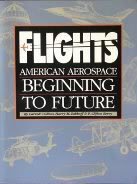
http://www.amazon.ca/Flights-American-Aerospace-Beginning-Future/dp/1885352085
 
If planes interest you, check out the book Harry co-wrote in 1994:

Thursday, June 30, 2016

Alongside the women at the airplane factory


Harry in 2000 and 1943.
He was always a feminist to me.
In May 2000, my dad emailed a friend about his work at Bell Aircraft Corp before he joined the Army during WWII. I discovered this in his computer files. I, for one, didn’t know he had his own “Rosie the Riveter” story, but I always called him a feminist! Little did Harry know, this simple email would give us a personal history lesson and set an example for writing down our thoughts and experiences.


From 1939 until I went into the Army in 1943, I worked for the Bell Aircraft Corp in Buffalo and Niagara Falls. In the beginning, there were around 200 employees engaged in the business of building aircraft, of whom about 50 were engineers/designers, and the rest, like me, were factory workers doing the assembling, riveting, bolting, screwing, etc., physical factory work.

There were also a few women, secretaries, bookkeepers, etc., whom the men all whistled at whenever they caught a glimpse of them walking by. Halfway through 1940, when the draft started taking men away in droves, the war industry underwent an explosive expansion, and that’s when women were actively sought and encouraged to enter the factory work force. (Initially, men were drafted for one year, but when the war started for us at the end of 1941, the draft was for one year plus the duration, which turned out to be for four more years.) Actually, between mid-1940 and mid-1941, some 10,000 people were added to the workforce at Bell, and the same thing was going on in war plants all over the country. Some were older men, too old for the draft, and others who left lesser-paying jobs to work in the defense industries, but most were women, thousands of them. 

By mid-1941, I was an old pro in the factory, at the ripe old age of 20. So I was made a foreman in the factory, mainly because most of the guys were being drafted so fast that I was getting seniority, and of course I had to teach the women how to do the required jobs – riveting, bolting, screwing and even how to use the tools, most of which operated on pneumatic (air) power rather than electricity. My section specialized in wings, flaps and ailerons, and part of the job required someone to crawl inside the wings to hold rivets on the inside, so size was important. Being small, I was able to do this, and the women were even better – smaller and agile. I got along well with them, though most of the men were merciless in harassing them. This was long before sexual harassment entered the vocabulary and I really felt sorry for the women and embarrassed by the crudeness of the men.

What became apparent, though, is that the women could do these jobs as well as or better than the men, and they were proving it every day in all the sections of the factory. By the time I left for the Army in the fall of ’43, there were 25,000 people working there, and maybe 20,000 of them were women. Mothers, daughters, aunts, sisters, grandmothers, sweethearts, even a few lesbians, according to the men who said they could recognize these things. All white, though, no blacks. We had a sizable number of black men, which was a departure for American industry at that time, but no black women. The country was still a segregated society then, and we haven’t made a lot of progress since then, either. 

Anyway, I found the women to be smart, willing to learn, willing to work, willing to suffer humiliation and harassment, and willing to help in the war effort and to bring their men home quicker. They came in all sizes and shapes and temperaments and personalities, and I did my best to make them feel welcome and appreciated. I kept telling them that as soon as they became proficient at their jobs, I was going to go fight for them.
                                               
Copyright 2016, Elaine Blackman


Photo from Airport Journals
Look closely at the thin, balding man on the right side of the photo, just behind the man stooping on the planes wing. (Click on photo to enlarge.) It sure looks like Harrys back. The photo caption on the Airport Journals website reads: "Workers are busy on the P-39 Airacobra assembly line at Bell Aircraft’s Niagara Falls plant. By the time the war ended, Bell had produced 9,584 P-39s. A few examples managed to survive; at last count, three were still flying."

Thursday, June 23, 2016

Keeping Harry’s music alive

Harry and Jeanette (his future wife) in the heyday of Big Band music

For most of his adult life, Harry wrote columns in local papers and newsletters, outside of his writing career in the Pentagon. What I didn’t know is that he pitched yet another series of articles at age 92, which he titled “The Music Corner”, at his last residence, Riderwood Village in Silver Spring, MD. He emailed the first article below to an editor there, but she rejected it. (A famous movie quote comes to mind: Big mistake. Big. Huge.) After my dad passed away in May 2014, we donated almost his entire music collection to the Riderwood Village library.


April 5, 2014
The Music Corner


Most of us here at Riderwood are old enough to remember the popular music of the World War II era. Many of us actually lived through the turbulent 1930s and ’40s, and those who came along soon afterwards have heard the songs of those days on the radio, in concerts and TV performances. I have been collecting the music of that era for the past half century and have amassed more than 15 thousand recordings featuring the big bands and the legendary performers who entertained us over the years. They are all on CD albums, which I’d gladly share with anyone interested.

Meanwhile, I’d like to share some of the background information I’ve accumulated regarding the songs, the composers, the lyricists and the performers. These kinds of stories may not be directly related to activities here at Riderwood, but there is certainly a high degree of interest here in popular music and the “big bands” in particular.

Just a year ago, for example, a singer named Clara Ann Fowler passed away, and while not many were aware of her death by her real name, everybody took note of it by her stage name – Patti Page. She was one of many performers dubbed Patti Page by the Page Milk Company, which featured her on its fifteen-minute radio show, but she kept that name permanently and went on to make it famous. She was only 18 when she started, shortly after she graduated from high school in 1945. In 1947 she signed a recording contract with Mercury Records, becoming their official girl singer, and in 1948 she had her first million-selling record single – “With My Eyes Wide Open, I’m Dreaming”. Remember that one? Run it in your mind and it will haunt you for days.

Mitch Miller, who made all those sing-a-long records, was the producer for Mercury Records. He had developed a technique for overdubbing a singer’s voice to create a vocal harmony arrangement. He used this process on many of Patti’s recordings and she became the first pop artist to do so. But it wasn’t until 1950 that she hit it big-time with her recording of “Tennessee Waltz”. It became her signature song and is listed among the two or three best-selling songs in American popular music history, along with Bing Crosby’s “White Christmas” and Irving Berlin’s “God Bless America”.


Nov. 17, 2013
TAPS


This article honors TAPS. It was Harrys final music-themed column in his previous community’s newsletter, in Leisure World, also in Silver Spring, MD. He kept up that column for several years. Researchers now consider the tale below as military folklore; chances are Harry heard it long ago.


It is especially fitting that we end the year of musical columns with the melody that ends each day at every American military base – TAPS. It is also fitting because it marks the end of my tenure as a columnist for this newsletter, since my Jeanette and I are leaving Creekside for the Assisted Living facility at Riderwood, where she can get much better care than I can provide for her here.

At sunset, when the flag is lowered and the sound of the bugle blowing TAPS over the loud-speaker system fills the air, everything on a base stops moving. Vehicles stop, people stand still in their tracks, all activity ceases while the solemn notes ring in their ears. It is a military tradition, just as the playing of TAPS at every military funeral is a tradition. It all started during the Civil War when most of the Southern states attempted to secede from the Union and the Northern states, under the leadership of Abraham Lincoln, stopped them from doing so. It is one of those historical moments that are quickly forgotten, yet have the power to change a nation.

The year was 1862. Capt. Elli and his Union troops were stationed at a place called Harrison’s Landing in Virginia where they had just fought a pitched battle with Confederate troops. After dark, when the fighting stopped, he heard the moans of a wounded soldier in the field between the two sides. Capt. Elli risked his life to crawl on his stomach to the wounded man, since both sides frequently indulged in random fire across the field between them. He succeeded in dragging the man back where he could get medical attention, but when he reached his own lines they found that he was a Confederate soldier and that he was dead. In the early morning light the Capt. took a closer look at the dead soldier and froze with shock when he suddenly realized that the dead boy was his own son.

His son had been studying music at a school in the South when the war began and, without telling his parents, he had enlisted in the Confederate Army, as did most of his fellow students. The next day, Capt. Elli asked if he could give his son a full military funeral along with the Union troops who had died in that battle, in spite of the fact that he was an enemy soldier. He was given permission to have a solitary funeral with only one musician, a bugler. The Capt. found a paper in his son’s uniform pocket with a song that the boy had written himself, and he asked the bugler to play the melody at the funeral.

The song, of course, was TAPS. That was the first time that haunting melody was played, and it became an instant sensation, to be played at all military funerals ever since. To this day you cannot hear that plaintive tune without getting a lump in your throat or even a tear in your eyes.

The words were added later, in three stanzas.

TAPS (Lyric)

Day is done, Gone the Sun, From the lakes, From the hills, From the sky. 
All is well, Safely rest, God is nigh.  

Fading light, Dims the sight, And a star, Gems the sky, Gleaming bright.
From afar, Drawing nigh, Falls the night. 

Thanks and praise, For our days, Neath the Sun, Neath the stars, Neath the sky.
As we go, This we know, God is nigh.

Harry’s wife for 70 years passed away at Riderwood Village barely two weeks after he wrote this story.

Copyright 2016
Elaine Blackman